
|
Montecristi Panama Hats MONTECRISTI PANAMA HATS Fino Fino specializes in hand-blocked
Montecristi Panama hats and has a broader selection than most other
sources. The Montecristi finois
simply the finest straw hat in the world. Visible when held to the light, a series of concentric rings in the crown, called vueltas, are created as new strands of straw are added. The larger the number of vueltas, the tighter the weave and the finer the hat. The number of master weavers is drastically dwindling as the younger weavers are uninterested in the back-breaking work required to create a fino or fino fino since they can create coarsely woven hats and souvenir items in a matter of hours. THE 'TOQUILLA'
PALM Montecristi is a small town in Ecuador where the Carloduvica Palmata, or "Toquilla" palm, as it is called by the Ecuadorians, is cut when the fronds are immature. Then they are peeled, boiled, dried, and the fronds are separated into the size strand the weaver chooses. This palm has been found in other South and Central American countries, but the conditions which produce the finest fronds are found only in the coastal lowlands of Ecuador. GRADING AND FINISHING THE HATSThe hat "bodies" are graded according to fineness of the weave, color of the straw, uniformity of the weave from crown to brim, and the quality of the backwoven edge (fine Panamas are never turned over and stitched). The hand-blocking and finishing of our hats is done in this country by a very few who are skilled in this art. A truly fine Panama is never machine blocked or glued and varnished to a helmet-like finish. Hand-blocked Montecristis begin at $450 and range into the thousands of dollars. WHY IS IT CALLED A PANAMA HAT?
Panama hats are available in a variety of styles, and, as with any "classic," are wearable with anything in your wardrobe--casual to dressy. Most styles are unisex, however, the round crown styles were specifically designed for women. The basic styles include: 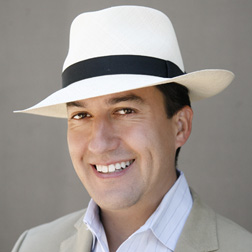 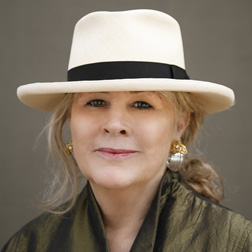 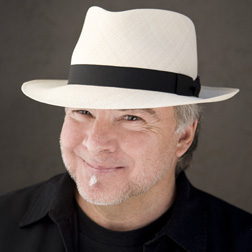 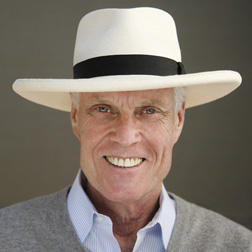 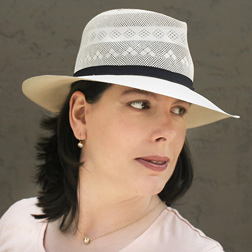 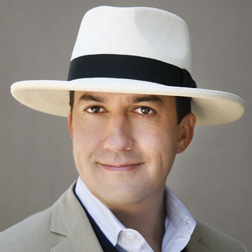 CARE OF YOUR PANAMA HAT A
fine Panama hat can last generations with proper care. It is
a
very durable hat, but not indestructible. Handle
your hat
with BOTH hands by the brim--especially the pinch-front
styles.
Handling your hat by the "pinch" will set in sharp creases that will
eventually lead to a break. A break in the crown can
generally be
patched from underneath but it cannot be rewoven. So avoid
sharp
creases and keep it away from your puppy. In spite of the
lore
you may have heard about rolling your hat for
traveling,
once it has been blocked and finished you will have to wear it or carry
a hat box when you travel. Actually the only style that ever
rolled well is the Optimo style but it, too, will break along the fold
if it is rolled often. Panamas | Home
|
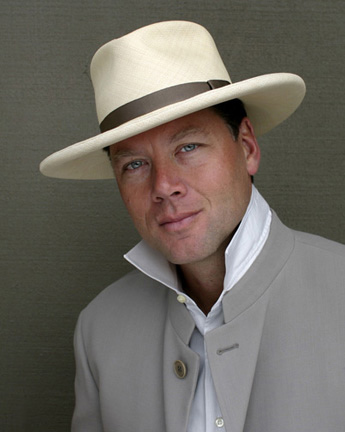 Hand-woven
in
Ecuador by master weavers, they are wearable works of art that can be
handed down to your grandchildren. Each hat is unique and represents
months of work. The hat is woven on a wooden block supported by
a
tripod, over which the weaver works standing up with their chest
bearing down on the block to weave the brim. They often work in the
cool of the night so that perspiration does not soil the hat.
Hand-woven
in
Ecuador by master weavers, they are wearable works of art that can be
handed down to your grandchildren. Each hat is unique and represents
months of work. The hat is woven on a wooden block supported by
a
tripod, over which the weaver works standing up with their chest
bearing down on the block to weave the brim. They often work in the
cool of the night so that perspiration does not soil the hat.
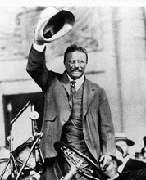 The
most widely accepted explanation of why this Ecuadorian hat is
known as
the "Panama" hat, is
that Panama was the point of export, where workers
on the Panama Canal found them
to be durable headwear and comfortable
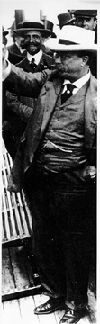
under the tropical sun. When President Teddy
Roosevelt visited during
the construction of
the canal, he returned to the United States wearing
one of these hats; the press dubbed it the "Panama Hat," and it has
been known as that ever since.
The
most widely accepted explanation of why this Ecuadorian hat is
known as
the "Panama" hat, is
that Panama was the point of export, where workers
on the Panama Canal found them
to be durable headwear and comfortable
under the tropical sun. When President Teddy
Roosevelt visited during
the construction of
the canal, he returned to the United States wearing
one of these hats; the press dubbed it the "Panama Hat," and it has
been known as that ever since.